Economic Benefits of the LHC Research Program
Is it worth investing in a new and large-scale research infrastructure?
1. Scientists
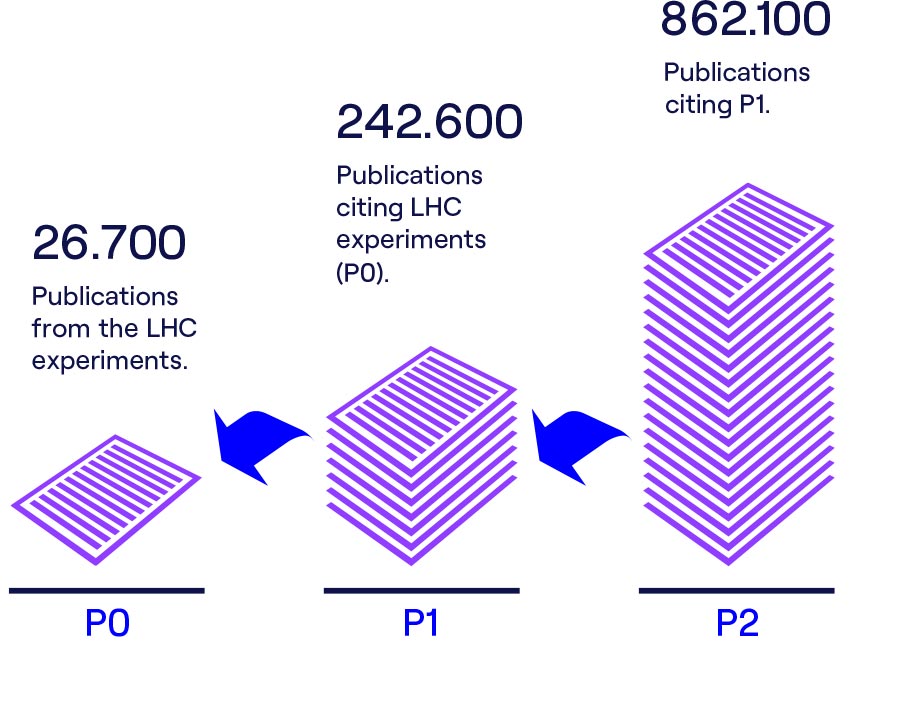
Creating new scientific knowledge and publishing and sharing it for the public good.
2. Students and Researchers: Towards a New “Knowledge Factory”
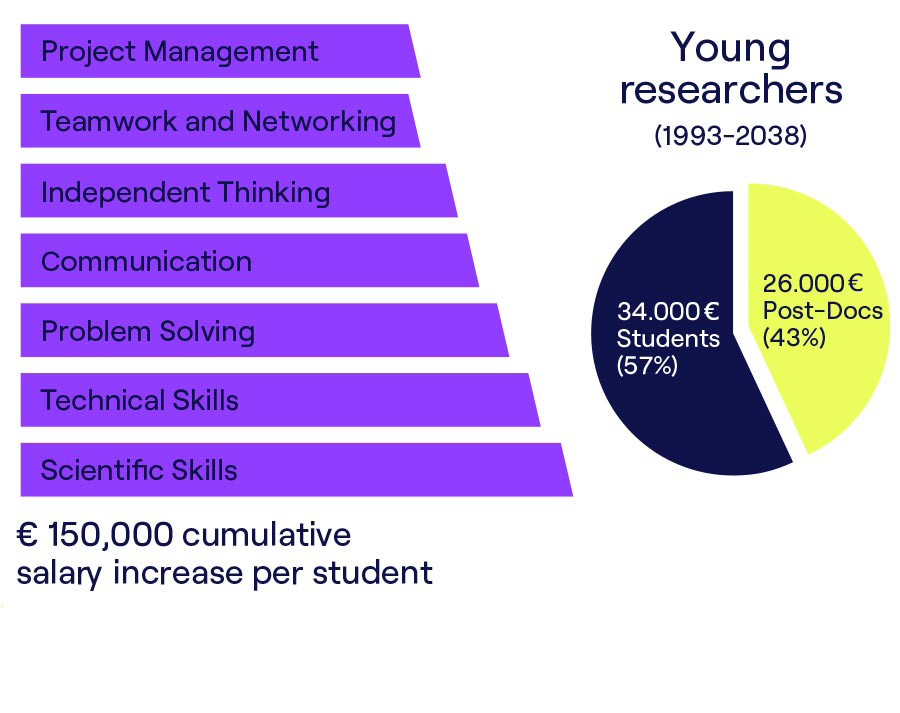
CERN’s scientific advancements are pushing the boundaries of technology and creating a positive impact on society on a global scale. While the laboratory’s primary mission is to conduct fundamental research in particle physics, it also serves to train the next generation of scientists and bring nations together. Furthermore, CERN has a long tradition of organizing training courses and visits for students and teachers from around the world. Large-scale research infrastructures, such as the proposed FCCs at CERN, support science education by bringing together teaching resources and expertise and by creating or strengthening networks that connect researchers, teachers, and students.
3. Industrial Partners
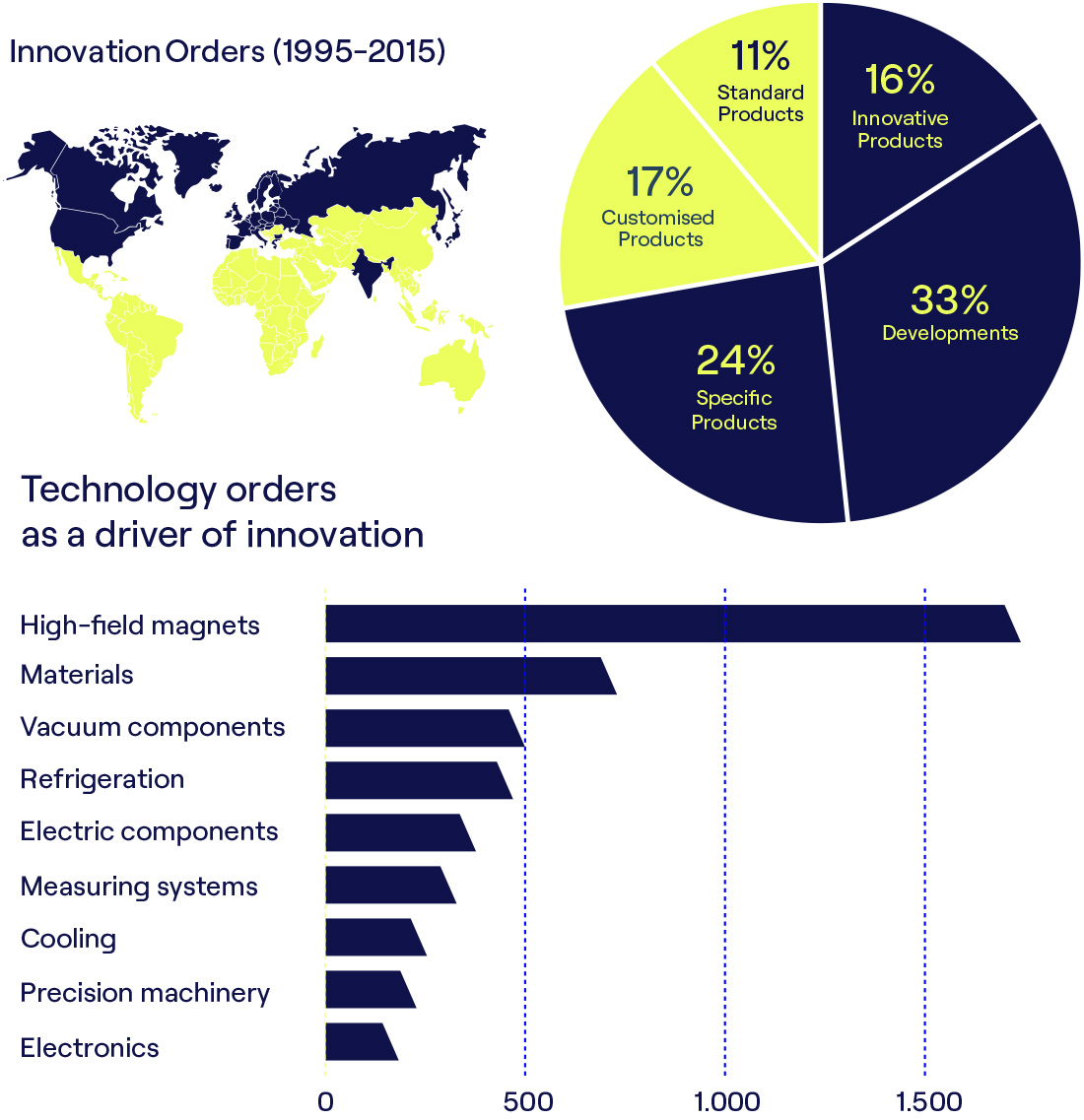
Since its founding in 1954, CERN has provided a unique facility for scientists worldwide. Challenging working conditions, such as extreme temperatures, vacuum, and radiation exposure, along with geophysical constraints, create unique challenges that have led to cutting-edge advancements in numerous technological fields. CERN operations demand advanced expertise in three areas: accelerator, detector, and computing technologies. Meeting these needs has led to advanced developments in many fields, including cryogenics, superconducting magnets, and radiation-resistant electronics and microelectronics. Industry is a key partner in this endeavor. The benefits extend throughout the entire supply chain and to subcontractors, demonstrating the scale of CERN’s impact on the industrial landscape of its member states. As a driving force behind cutting-edge technology, CERN’s procurement contracts with industry create real added value for society.
Global Participation | 4,204 Companies | 47 Countries | 33,414 Contracts
4. General Public
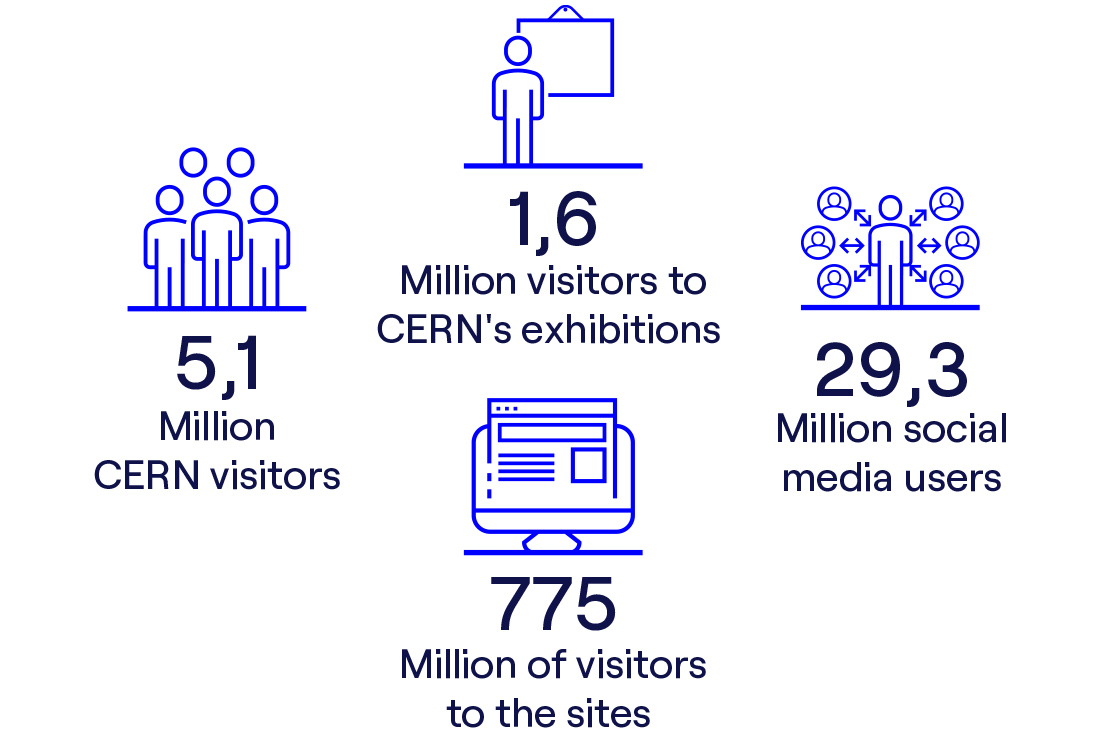
A new research infrastructure also creates a certain cultural value for the general public. Despite uncertainties in quantifying this impact, it has been determined that half of this value comes from visitors to CERN facilities and from traveling exhibitions that inspire audiences in member countries and beyond.
5. Taxpayers
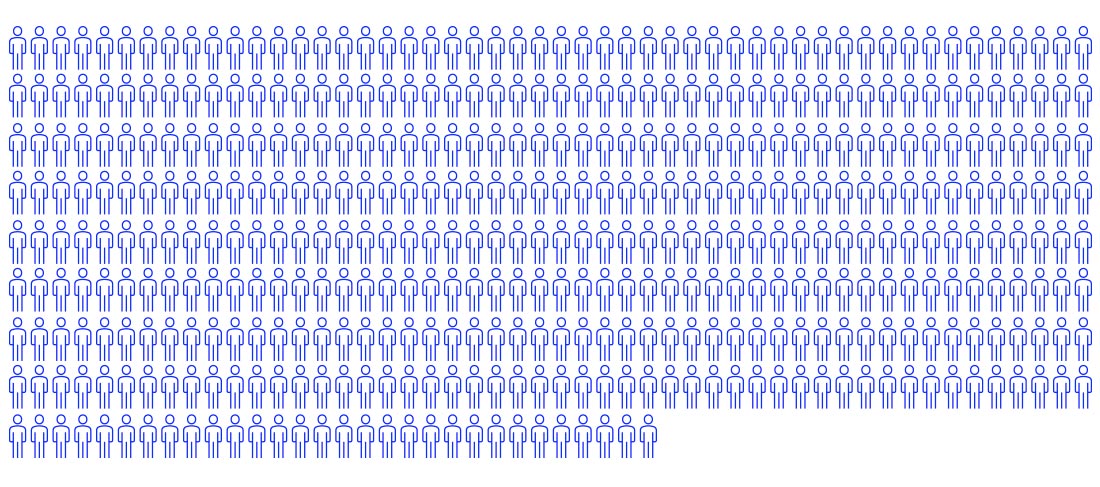
When distributed among CERN’s 430 million taxpayers in its 23 member countries, the cost averages €2.50 per person per year. Could you donate one coffee a year to support our research and education program?
Furthermore, public investment in scientific projects yields returns for society. For example, a recent social cost-benefit analysis of the HL-LHC conservatively estimates that every €1 cost provides a €1.2 return to society, while a similar study on FCCs estimates an even higher benefit/cost ratio, yielding a €1.8 return.
INVESTING IN BASIC RESEARCH – SHAPING A BETTER FUTURE.
LHC Program (1993-2038)
Economic Impact
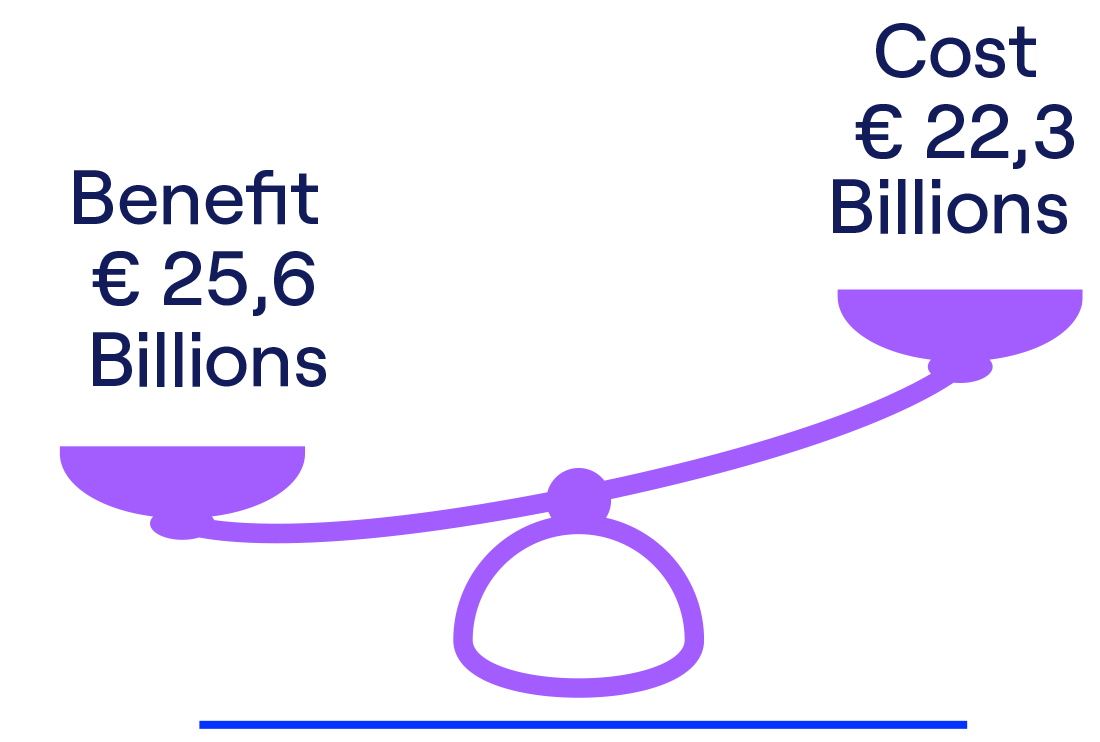
The Large Hadron Collider (LHC) research program at CERN generates approximately €3.3 billion in net present value for society between 1993 and 2038 (after deducting investment and operating costs).
In other words, the research infrastructure covers its costs with a surplus of 15% in the form of societal benefits.
The data in this infographic is taken from a cost-benefit analysis conducted by the University of Milan and the Milan Centre for Industrial Studies (Italy). The European Union’s Guide to Cost-Benefit Analysis of Investment Projects (2014) was used to ensure a fact-based approach.
You can access the study HERE.